
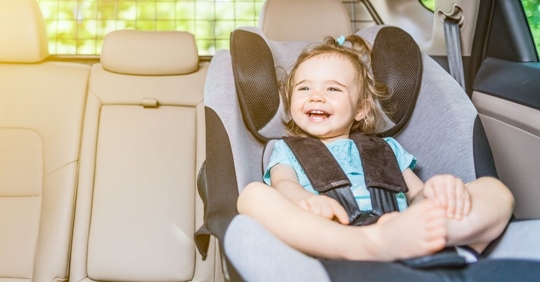
Choosing the right car seat depends on your child’s age, height, weight, developmental needs, and the limits printed by the seat manufacturer. California law establishes minimum requirements, but the safest choice is usually to keep a child in each stage—rear-facing, forward-facing with a harness, and then a booster—until the child reaches that seat’s height or weight limit.
Parents should also know that California’s child-restraint rules will change on January 1, 2027. This article explains the law in effect during 2026 and identifies the upcoming change so families can prepare without confusing a future requirement with the rule that applies today.
What does California law require in 2026?
During 2026, California Vehicle Code section 27360 generally requires children under eight to ride properly secured in an appropriate child passenger restraint system in a rear seat. A child under two must generally ride rear-facing unless the child weighs at least 40 pounds or is at least 40 inches tall. The child must still be secured within the manufacturer’s height and weight limits.
Children who are eight or older—or who have reached 4 feet 9 inches—may use a properly fitted safety belt under the current rules. All children under 16 must be appropriately restrained.
There are limited exceptions to the rear-seat requirement, such as vehicles with no rear seat or situations in which all rear seating positions are occupied by young children. A rear-facing child seat should never be placed in front of an active passenger airbag.
What changes on January 1, 2027?
Beginning January 1, 2027, California will use a more detailed five-step seat-belt fit test for children and teenagers. The test considers whether the child can sit all the way back, bend the knees over the seat edge, keep the shoulder belt across the chest and shoulder, keep the lap belt low across the thighs, and remain in that position for the entire trip.
Beginning in 2027, a child age eight through 15 may use a safety belt only if the child satisfies the five-step fit test; otherwise, the child must remain in an appropriate child passenger restraint system. Families should review the new requirements before the effective date. Even in 2026, the five-step test is a useful safety check: if an adult belt does not fit correctly, a belt-positioning booster may still be the safer choice.
How do I choose the correct stage?
Rear-facing seat
Infants should ride rear-facing. The National Highway Traffic Safety Administration also recommends keeping children rear-facing for as long as the seat permits, not merely until the child reaches a particular birthday. Convertible and all-in-one seats often allow rear-facing use at higher weights than infant-only carriers.
Forward-facing seat with a harness and tether
After a child outgrows the rear-facing limits, the next stage is generally a forward-facing seat with a harness and top tether. The tether reduces forward movement of the child’s head and should be used when the vehicle and seat instructions permit it.
Belt-positioning booster
A booster positions the vehicle’s lap-and-shoulder belt across the stronger areas of the child’s body. The lap belt should sit low across the upper thighs or hips, not the stomach. The shoulder belt should cross the center of the chest and shoulder, not the neck or face.
Vehicle safety belt
A child is ready for the vehicle belt only when it fits properly and the child can maintain that position throughout the ride. Moving a child out of a booster too early is a common mistake because age alone does not determine whether an adult belt fits.
What practical checks should parents make?
- Read both the car-seat manual and the vehicle owner’s manual. Installation instructions vary by product and seating position.
- Confirm that the seat is installed tightly and at the correct angle. Use either the lower anchors or the vehicle belt as directed; do not combine installation methods unless both manufacturers allow it.
- Position the harness and chest clip according to the seat instructions. Bulky coats can interfere with a snug harness.
- Register the seat with its manufacturer so you can receive recall notices.
- Check the seat’s model number and manufacture date in the NHTSA recall database.
- Ask a certified child passenger safety technician to inspect the installation if you are uncertain.
- Do not use an expired seat, a seat with missing labels or instructions, or a used seat whose crash history is unknown.
What should I do with the car seat after a crash?
Follow the manufacturer’s replacement instructions and NHTSA guidance. Some manufacturers require replacement after any collision. NHTSA states that seats should be replaced after a moderate or severe crash and provides criteria for determining whether a crash was minor.
If a child was injured or a product defect may have contributed to the injury, do not discard the seat before obtaining legal advice. Photograph the seat in the vehicle, its installation path, labels, model and serial information, visible damage, and the surrounding interior. Preserve the seat, base, inserts, harness pieces, manual, receipt, and packaging if available. A seat that appears unimportant immediately after a crash may later become significant evidence.
Common mistakes that can affect safety and an injury investigation
Parents often focus on buying a well-rated seat but overlook installation and preservation. Common problems include moving to the next stage too soon, using an unapproved accessory, placing the harness incorrectly, failing to use a tether, and throwing away the seat immediately after a collision.
An incorrectly used seat does not automatically answer who caused a crash. However, insurers may examine whether the restraint system affected the nature or severity of a child’s injuries. Accurate photographs, medical evaluation, and preservation of the product allow that issue to be addressed with evidence rather than assumptions.
Frequently asked questions
Does my child have to be rear-facing after age two?
California’s 2026 minimum rule applies to children under two, subject to the statutory height and weight exceptions. NHTSA nevertheless recommends remaining rear-facing until the child reaches the seat manufacturer’s rear-facing limit.
Can I place a child seat in the front passenger seat?
California permits front-seat use only in limited circumstances. A rear-facing child seat must not be placed in front of an active passenger airbag. The rear seat is generally the safer location for children.
Does a traffic citation determine an injury claim?
Not by itself. A citation can be relevant, but responsibility for a collision and the cause of an injury depend on the complete evidence. Each case requires an individual analysis.
Talk with a Northern California child-injury attorney
If your child was injured in a collision, the Law Offices of Larry S. Buckley can help you understand the evidence, insurance issues, and deadlines that may apply. Call 530-413-0245 or request a consultation through the firm’s website. No particular outcome can be promised, and the facts of every case are different.