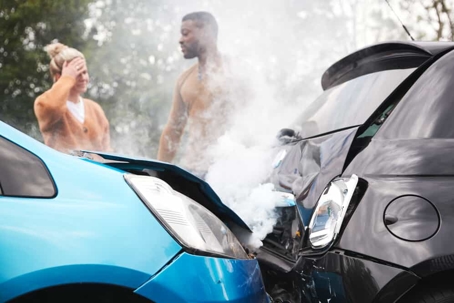
The type of collision can help identify likely evidence, injury mechanisms, and potentially responsible parties—but it does not determine fault by itself. A rear-end crash, T-bone collision, sideswipe, rollover, or multi-vehicle pileup must still be evaluated using driver conduct, roadway conditions, vehicle data, witness accounts, photographs, and applicable California law.
Understanding the crash pattern can help an injured person ask better questions and preserve evidence before vehicles are repaired, video is overwritten, or witnesses become difficult to locate.
What are the most common collision patterns?
Rear-end collision
A rear-end collision occurs when one vehicle strikes the back of another. Following too closely, distraction, excessive speed, and failure to account for traffic conditions are common issues. Still, it is a mistake to assume the rear driver is automatically responsible in every case. Sudden unsafe lane changes, nonfunctioning lights, a chain reaction, or a vehicle defect can change the analysis.
Evidence may include the location and depth of vehicle damage, event-data-recorder information, dash-camera video, phone records obtained through proper legal procedures, and the spacing between vehicles in a chain reaction.
Head-on collision
Head-on crashes often involve a vehicle crossing a center line, entering the wrong side of a divided road, or traveling the wrong way. Investigators may examine impairment, fatigue, distraction, passing maneuvers, roadway design, tire marks, steering inputs, and whether a medical emergency occurred.
Because impact forces can be substantial, occupants should be medically evaluated even when they initially believe they escaped with minor injuries.
Side-impact or T-bone collision
In a T-bone crash, the front of one vehicle strikes the side of another. These collisions frequently occur at intersections, parking-lot exits, and driveways. Traffic-signal timing, right-of-way rules, sight obstructions, witness observations, and nearby business or residential cameras can be especially important.
Video should be requested promptly. Many systems overwrite recordings within days or weeks.
Sideswipe and lane-change collision
A sideswipe occurs when the sides of two vehicles make contact, often during merging, passing, or a lane change. Disputes commonly arise over which vehicle crossed the lane line. Photographs showing the direction of scrape marks, paint transfer, mirror damage, lane configuration, and final vehicle positions can be more useful than a simple statement that “the other driver came into my lane.”
Rollover or road-departure crash
Rollovers may begin with an unsafe maneuver, a collision with another vehicle, contact with a curb or soft shoulder, a tire failure, or an alleged vehicle defect. Potential evidence extends beyond the drivers’ conduct and can include tires, suspension components, roof damage, maintenance records, and the vehicle’s electronic data.
A damaged vehicle should not be destroyed or released for salvage before potential evidence issues are considered.
Underride collision
An underride crash occurs when a smaller vehicle travels beneath part of a large truck or trailer. These crashes can cause catastrophic injuries because the trailer may intrude above the smaller vehicle’s primary crash-protection structures. Lighting, conspicuity markings, underride guards, trailer position, and truck maintenance may all require examination.
Multi-vehicle or chain-reaction crash
In a pileup, more than one driver or company may share responsibility. The first impact is not always the only cause of the injuries. Each contact should be mapped separately, including the order of impacts, vehicle movement, occupant statements, and whether later impacts caused additional harm.
How does the crash type affect fault in California?
California uses comparative fault. That means responsibility may be divided among multiple people or entities, and an injured person’s compensation can be reduced by the percentage of responsibility assigned to that person. The body-damage pattern may support one explanation of the collision, but it rarely tells the whole story.
Potentially responsible parties can include drivers, employers whose workers were driving within the scope of employment, vehicle or component manufacturers, maintenance providers, contractors, and public entities responsible for a dangerous roadway condition. Not every collision involves all—or any—of those additional parties.
What evidence should I preserve after any type of crash?
- Photograph all sides of every vehicle, the vehicle interiors, debris, tire marks, traffic controls, road surface, weather, sight lines, and visible injuries.
- Save dash-camera footage immediately so the device does not overwrite it.
- Obtain names and contact information for witnesses.
- Keep repair estimates, tow and storage records, rental-car documents, and photographs taken by the insurer or body shop.
- Preserve damaged child restraints, helmets, tires, or vehicle components that may be relevant.
- Report symptoms accurately and obtain appropriate medical care. Some symptoms become clearer after the immediate stress of a crash subsides.
- Avoid giving a speculative recorded statement about speed, distance, or injuries before you have reliable information.
What California reporting deadline applies?
California generally requires an SR-1 report to the Department of Motor Vehicles within 10 days when anyone is injured or killed or when property damage to any one person exceeds $1,000. This DMV report is separate from a police report and separate from an insurance claim.
The usual limitations period for a California action seeking damages for personal injury caused by another’s wrongful act or neglect is two years. Important exceptions can shorten or alter the deadline. For example, a claim relating to personal injury against a California public entity generally must first be presented within six months. Claims involving minors, delayed discovery, out-of-state defendants, and other circumstances require individual analysis.
Common mistakes after a collision
One frequent mistake is allowing the visible damage to dictate the entire claim. A modest-looking bumper does not establish the absence of injury, and severe property damage does not establish a particular diagnosis. Medical causation requires medical evidence.
Other mistakes include waiting to photograph the scene, losing video, discarding physical evidence, overlooking additional impacts in a pileup, posting about the crash on social media, and assuming an insurance adjuster has identified every potentially responsible party.
Frequently asked questions
Is the rear driver always at fault in a rear-end crash?
No. The rear driver is often scrutinized for following distance and attention, but fault depends on the complete facts. A sudden lane change, unsafe backing maneuver, defective lighting, or chain reaction may affect the result.
Does a police report conclusively decide fault?
No. A police report can be important evidence, but insurers, attorneys, judges, and juries may consider additional evidence. The officer may not have witnessed the collision.
Can more than one person be responsible?
Yes. California’s comparative-fault system permits responsibility to be allocated among multiple parties when the evidence supports it.
Speak with a Northern California car-accident attorney
The Law Offices of Larry S. Buckley represents people injured in Northern California collisions. If there is a dispute about how a crash happened, early investigation may help preserve evidence. Call 530-413-0245 or contact the firm online to discuss the specific facts and deadlines involved.