
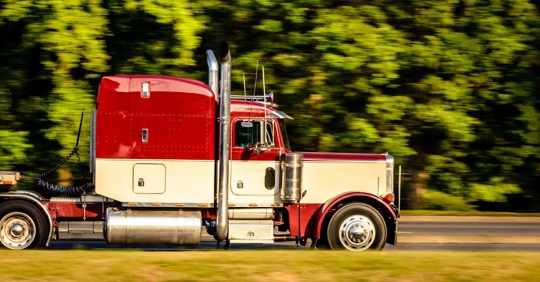
A runaway truck is a commercial vehicle whose driver can no longer adequately control its speed, most commonly on a long or steep downgrade. Brake overheating or failure is a frequent concern, but excessive entry speed, improper gear selection, poor maintenance, an overloaded or improperly loaded trailer, weather, and component defects may also contribute.
After a runaway-truck collision, responsibility may extend beyond the driver. The motor carrier, maintenance contractors, loading companies, equipment owners, and component manufacturers may require investigation depending on the evidence.
Why can a truck lose braking control on a downgrade?
Heavy commercial vehicles gain substantial momentum while descending. A driver who relies continuously on service brakes can generate excessive heat. As the brakes overheat, their stopping ability can diminish—a condition commonly described as brake fade.
California’s Commercial Driver Handbook instructs drivers to select a low gear before beginning a downgrade and to use proper braking techniques. Federal rules also prohibit operation of a commercial motor vehicle unless the driver is satisfied that critical equipment, including service brakes and trailer brake connections, is in good working order.
Potential contributing factors include:
- Worn, damaged, contaminated, or improperly adjusted brakes.
- Air-brake or trailer-connection problems.
- Failure to inspect or repair a known defect.
- Entering a grade too fast or in an improper gear.
- Excessive vehicle or cargo weight.
- Improper cargo distribution or securement.
- Tire, wheel, transmission, or other mechanical failure.
- Ice, snow, rain, or a roadway hazard.
- Inadequate driver training, fatigue, or impairment.
The existence of a mechanical problem does not automatically excuse the driver or carrier. The investigation should ask why the problem occurred, whether it should have been found, and how the driver and company responded to earlier warnings.
What is a runaway-truck ramp?
Truck escape ramps provide an emergency path designed to slow a vehicle that cannot stop normally. Many use an uphill grade, deep gravel or aggregate, or other resistance to absorb the truck’s energy.
Drivers of passenger vehicles should never stop, park, or use an escape ramp as a turnout. Obstructing the entrance can remove the only safe option available to a truck experiencing brake loss.
What should I do if I see a truck losing control?
Do not try to pass, pace, or cut in front of the truck. Create as much space as reasonably possible, move out of its path when it is safe to do so, and avoid stopping in or near an escape-ramp entrance. Call 911 when it can be done safely and provide the roadway, direction of travel, truck description, and location.
After a collision, move to safety if possible and follow emergency personnel’s directions. Do not approach leaking fuel, hazardous cargo, unstable wreckage, or a truck positioned on a steep grade.
Who may be legally responsible?
The commercial driver
The driver’s speed, gear selection, braking technique, pre-trip inspection, response to warning signs, training, rest, and compliance with safety rules may be examined.
The motor carrier or trucking company
The carrier may be responsible for its own conduct and, in appropriate circumstances, for the conduct of its driver. Relevant issues can include hiring, training, supervision, maintenance systems, dispatch practices, and pressure to meet an unsafe schedule.
A maintenance or repair provider
If an outside shop inspected or repaired the brakes, its work orders, measurements, replaced parts, and technician notes may be important. A recent brake service does not automatically prove proper work.
A shipper, loader, broker, or equipment owner
Improper loading, excess weight, or a defective trailer may implicate additional businesses. Responsibility depends on who controlled the work and what each party knew or should have known.
A manufacturer or parts supplier
A defective brake, tire, coupling, warning system, or other component may raise a product-liability issue. The failed part must be preserved for appropriate inspection.
What evidence can disappear quickly?
Commercial-truck cases often involve records that are controlled by businesses rather than the injured person. Prompt preservation efforts may be needed for:
- Electronic control module or “black box” data.
- Electronic logging device records.
- Dash-camera and outward-facing camera video.
- GPS, telematics, dispatch, and route information.
- Driver qualification, training, and hours-of-service records.
- Pre-trip and post-trip inspection reports.
- Brake inspection, adjustment, repair, and maintenance records.
- Cargo weight, bills of lading, loading diagrams, and scale tickets.
- The tractor, trailer, brake components, tires, and coupling equipment.
- 911 calls, traffic-camera video, witness information, and scene measurements.
One of the most damaging delays is allowing the tractor, trailer, or failed components to be repaired, sold, or destroyed before qualified experts can inspect them.
What compensation may be available?
When negligence or a defective product causes a crash, an injured person may be able to seek compensation for provable losses such as medical expenses, lost income, reduced earning capacity, property damage, and pain and suffering. The available categories and amounts depend on the facts, evidence, insurance, and applicable law. No particular result is guaranteed.
California’s ordinary limitations period for a negligence-based personal injury action is generally two years, but shorter deadlines and other exceptions can apply. A public-entity claim related to roadway design or maintenance may require presentation within six months. Evidence preservation should begin long before either deadline approaches.
Common mistakes after a runaway-truck crash
Injured people sometimes assume the police report or a federal inspection will preserve everything. Those investigations may be useful, but they do not replace an independent civil investigation. Other mistakes include authorizing destruction of the vehicle, failing to identify the trailer and all company names, overlooking cargo records, and giving a detailed recorded statement before the facts are known.
Frequently asked questions
Is every runaway-truck crash caused by failed brakes?
No. Brake problems are common, but speed, gearing, loading, weather, driver conduct, tires, and other mechanical systems may contribute.
Is the driver the only possible defendant?
No. Depending on the evidence, a carrier, maintenance provider, equipment owner, loading company, or manufacturer may share responsibility.
Why is early legal investigation important?
Electronic data can be overwritten, businesses may retain records for limited periods, and the truck may be repaired quickly. A timely preservation request can help protect evidence.
Contact a Northern California truck-accident attorney
The Law Offices of Larry S. Buckley investigates serious commercial-vehicle collisions throughout Northern California. Call 530-413-0245 or contact the firm online to discuss the circumstances and any approaching deadlines.