
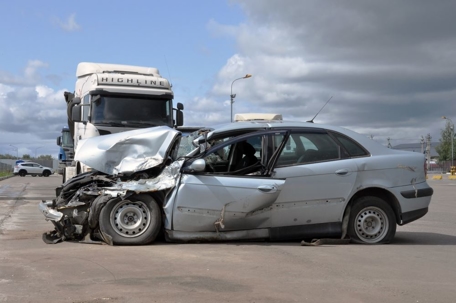
A truck driver or insurance carrier may describe a collision one way, while electronic records show the truck was accelerating, braking late, or operating beyond the driver’s recorded duty period shortly before impact. California truck accident black box data can supply an important factual check, but it doesn’t automatically tell the whole story.
Serious truck collision claims often turn on evidence that isn’t visible in a police report or a few crash scene photographs. We’ve handled more than a thousand personal injury cases, and when the evidence calls for it, we work with accident reconstruction professionals, biomechanical engineers, and medical professionals to examine how a crash happened and how it affected the person injured.
Let Law Offices of Larry S. Buckley review the available evidence and explain your legal options. Call (530) 413-0245 or contact us online.
What Truck Black Box Data Actually Includes
The term “black box” is a convenient label, not the name of one universal device. A commercial truck may contain several electronic systems, each recording different information for different lengths of time.
- Engine Control Module: The Engine Control Module is the truck’s computer system for managing engine performance. Depending on the vehicle and the available download method, it may contain data on engine speed, vehicle speed, throttle position, brake use, cruise control activity, and engine faults around a triggering event.
- Event Data Recorder: An Event Data Recorder captures information tied to a sudden event, such as a hard brake application or collision. It may record a short window of activity before and after impact, though recording capacity varies considerably by manufacturer, truck model, and system configuration.
- Electronic Logging Device: An Electronic Logging Device automatically records a commercial driver’s duty status and driving time by synchronizing with the vehicle’s engine. These records can help evaluate hours of service compliance. Specifically, they can show whether a driver had required rest periods and stayed within federal driving limits.
- Telematics and Video Systems: Telematics data can include GPS location, route history, speed alerts, harsh braking alerts, communications, and fleet management information. A video event recorder may capture outward-facing roadway footage, inward-facing cab footage, or both, depending on the equipment the carrier installed.
A truck involved in a crash won’t necessarily have every recorder, and an available system may not capture the precise data point that matters most in a particular claim.
How Electronic Data Supports Fault Analysis
Electronic records can test a driver’s account against measurable vehicle activity. They may show whether the truck was slowing, accelerating, holding speed, or traveling too fast to stop before the collision. Speed and throttle records may bear on whether a driver was following too closely or approaching traffic too fast for conditions. Brake application data can help assess reaction time, while steering and engine activity can contribute to accident reconstruction of a loss-of-control event, unsafe lane movement, or impact sequence.
Electronic records can also surface inconsistencies between a driver’s description and the truck’s documented movements. They’re one piece of evidence, not a substitute for a full investigation.
Fatigue, Scheduling, and Driver Logs
Electronic logging records and supporting documents can help determine whether a driver was within applicable hours of service requirements. They also provide a timeline for reviewing route timing, dispatch communications, loading delays, rest periods, and the driver’s own statements about when they last slept.
Federal regulations require motor carriers to retain Electronic Logging Device records and supporting documents for six months. That rule doesn’t create a single retention period for Engine Control Module data, telematics records, or video files, which may be overwritten or handled differently under a carrier’s own practices.
Liability Beyond the Driver
Truck crash liability can extend beyond the person behind the wheel. Data showing a mechanical warning, repeated fault code, unusual braking pattern, cargo-related handling problem, or questionable dispatch timeline may point to the motor carrier, maintenance personnel, cargo handlers, or another responsible party.
Electronic records can also matter when comparative fault is raised. This is the process of assigning percentages of responsibility among everyone involved. Reliable data can help evaluate claims that an injured motorist contributed to the crash, rather than accepting that allegation at face value.
Why Preservation Has to Start Immediately
Truck evidence can change through ordinary business operations. The vehicle may return to service, a damaged component may be replaced, video may be overwritten, and electronic data may be altered by repairs, software updates, or later driving activity.
A prompt evidence preservation letter puts the carrier and other relevant parties on written notice to retain materials that may matter to the claim. That request should go beyond the general phrase “black box” and identify the truck, trailer, electronic modules, logging records, telematics information, video, driver qualification records, dispatch communications, maintenance files, inspection reports, and cargo documentation.
Spoliation is the loss, destruction, or material alteration of evidence that should have been preserved. It can carry legal consequences, depending on when notice was received, what information existed, and why it was no longer available. Waiting for an insurer to finish its own review can leave those questions permanently unanswered.
How Attorneys Obtain and Interpret the Records
Electronic vehicle data is typically owned or controlled by the truck owner or carrier. Access may require consent, a formal litigation request, a court order, or another legally authorized process, depending on the record and the posture of the case. Obtaining a download isn’t the final step. The data must be correctly identified, collected in a way that preserves its integrity, and evaluated by someone who understands the system’s capabilities and limitations.
Comparing Data with Physical Evidence
Electronic records should be compared against the police report, roadway marks, photographs, vehicle damage, witness accounts, available video, and inspection findings. If the data shows braking seconds before impact, physical evidence may help determine whether that braking was timely, sufficient, or consistent with the crash location. Accident reconstruction uses physical evidence, measurements, vehicle dynamics, and other inputs to build a reasoned account of the collision. Medical records matter here too, because the mechanics of an impact can help connect the forces involved to the injuries the person reported.
Building a Complete Claim Record
We draw on accident reconstruction professionals, biomechanical engineers, medical professionals, vocational rehabilitation counselors, and economists when a claim requires that kind of multidisciplinary analysis. That work connects truck operation records to the collision itself, the resulting injuries, the medical care required, and the practical financial effects of the crash. A thorough investigation doesn’t accept the carrier’s preferred interpretation of its own data. It asks what the records show, what they don’t show, and whether other evidence confirms or challenges the conclusion.
What Black Box Data Can’t Prove on Its Own
Electronic records can be valuable, but they aren’t a verdict in digital form. A system may have missing data, an inaccurate clock setting, limited recording capacity, an incomplete download, a calibration issue, or no record of the event at all. Black box data may establish aspects of vehicle behavior (speed or braking, for instance) without independently proving negligence. It also can’t, on its own, establish every cause of a collision, determine legal responsibility, prove the full medical cause of an injury, or set the value of a claim.
A speed reading needs context. Road conditions, traffic, visibility, following distance, mechanical condition, driver actions, and the conduct of other motorists all affect what that number means. The same caution applies to driver logs: an Electronic Logging Device may show recorded duty status, but that record should be assessed alongside supporting documents, communications, location information, and other evidence before drawing conclusions about fatigue or compliance.
What This Means for Your Case
Truck electronic records can preserve details that memory, photographs, and competing narratives miss. Their value depends on prompt preservation and careful comparison with the complete body of evidence. Assuming one download answers every question is not a substitute for thorough analysis.
If a truck crash has left you or a family member injured, we can review the available evidence and discuss next steps. Law Offices of Larry S. Buckley serves Northern California and is available 24 hours a day at (530) 413-0245.